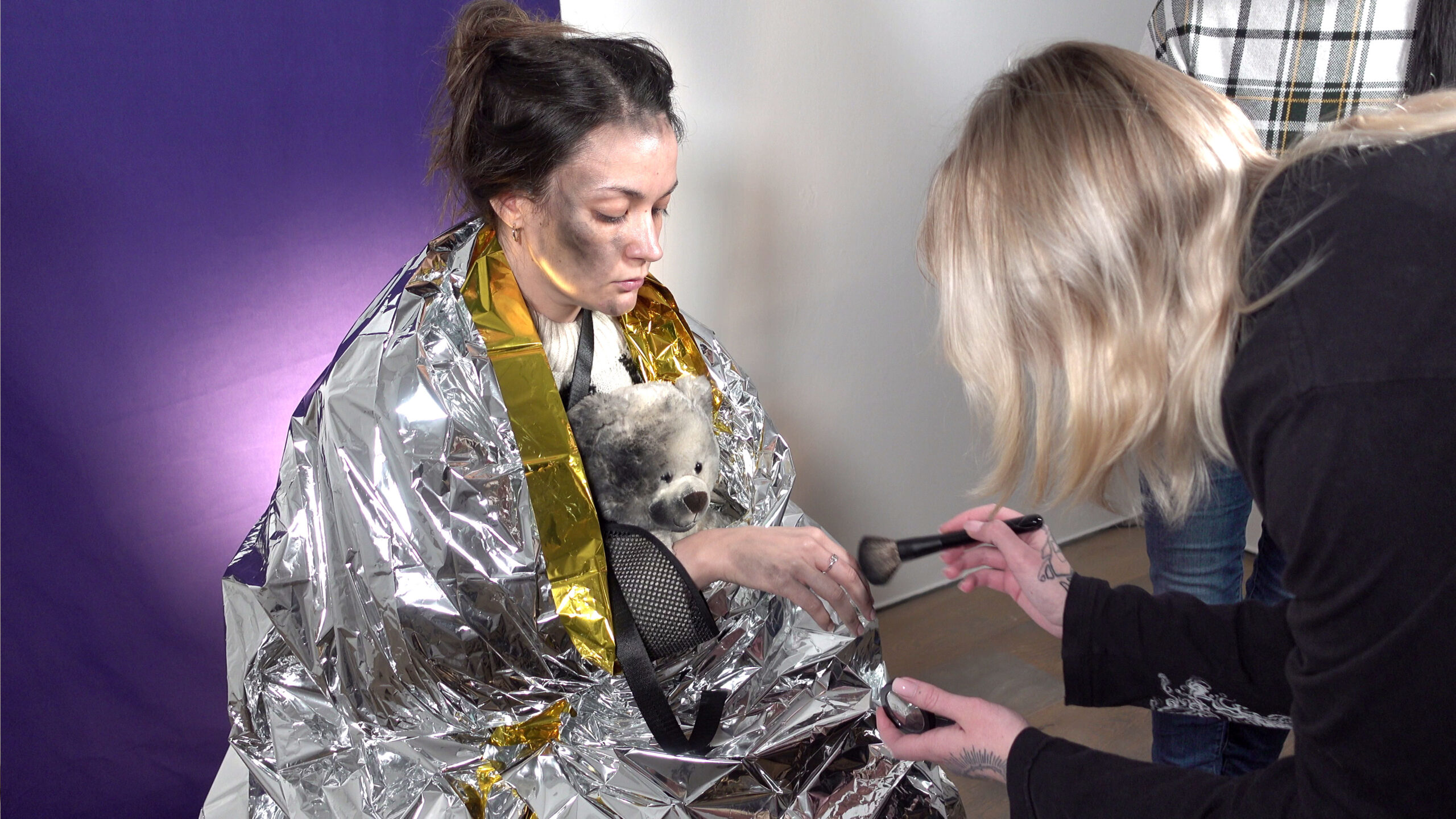
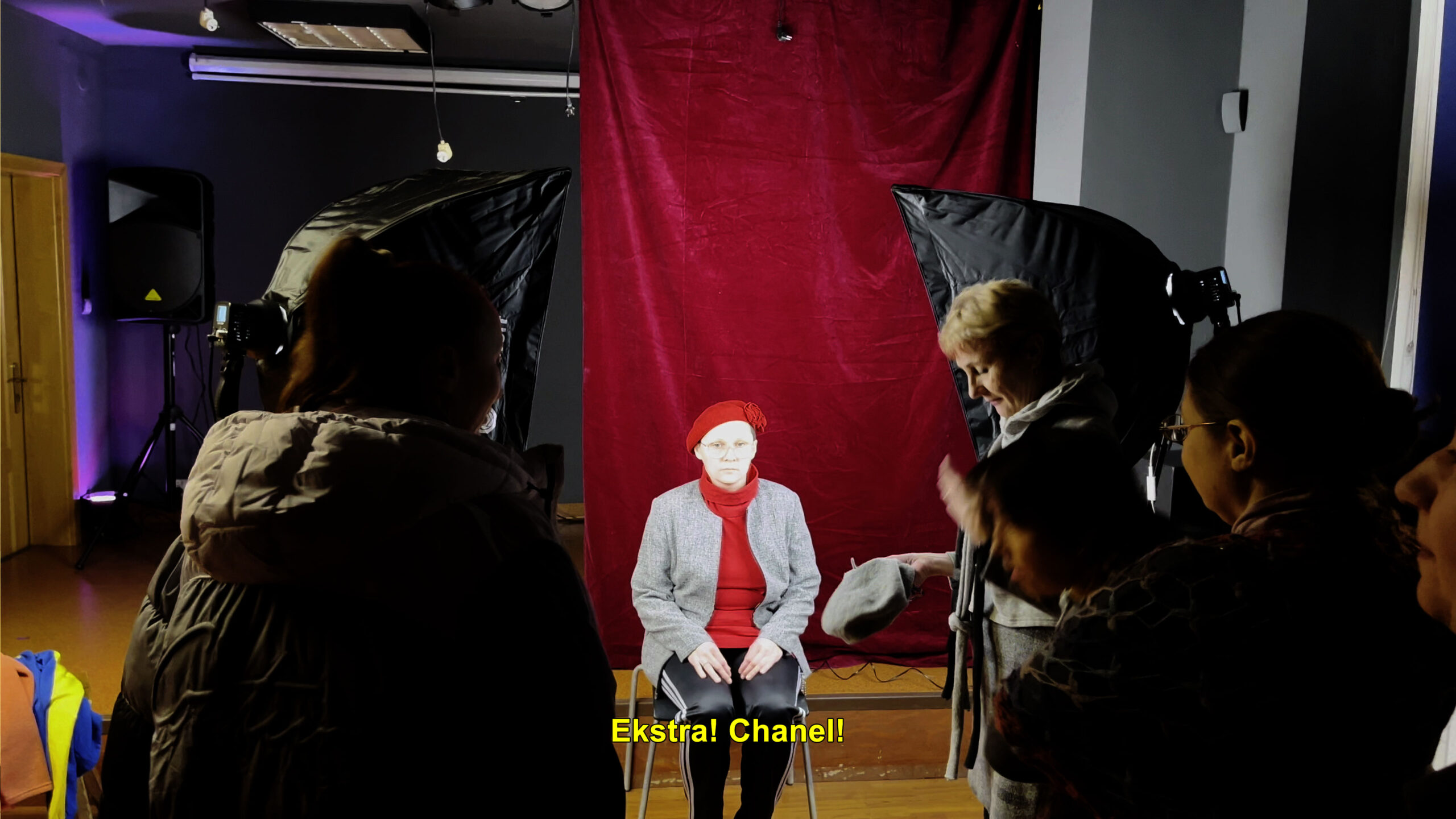
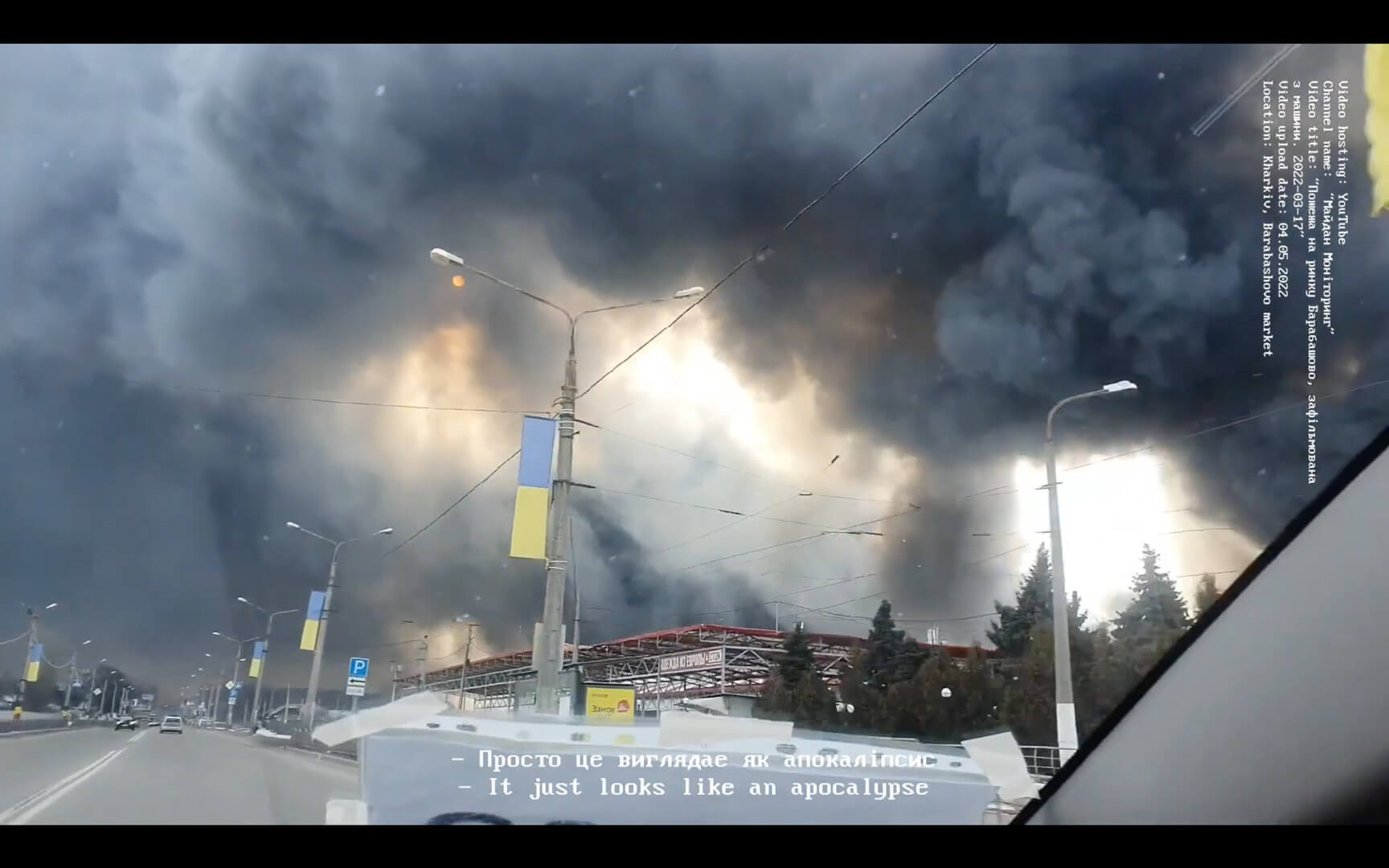
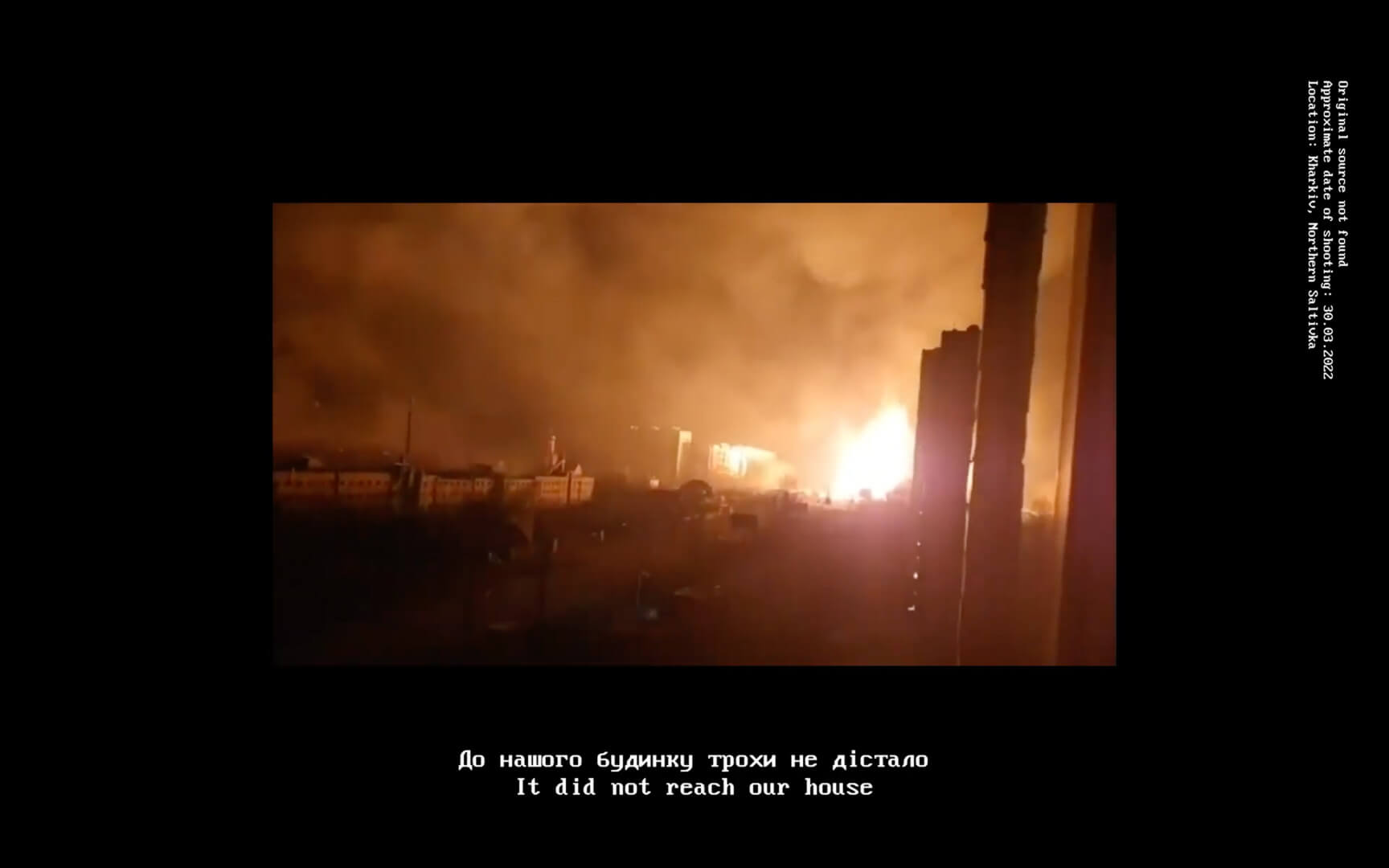
We used to say, ‘It’s the bomb’. Meaning ‘wonderful’.
The fractures of language became more pronounced in the experience of living through war. Words reverted to their original meanings.
We would say, ‘What a clear sky’. And although we said it, we didn’t quite grasp the quality of that clarity.
We would say, ‘Heavy artillery’. Meaning ‘a strong argument’. An argument such as war leaves no room for using words thoughtlessly.
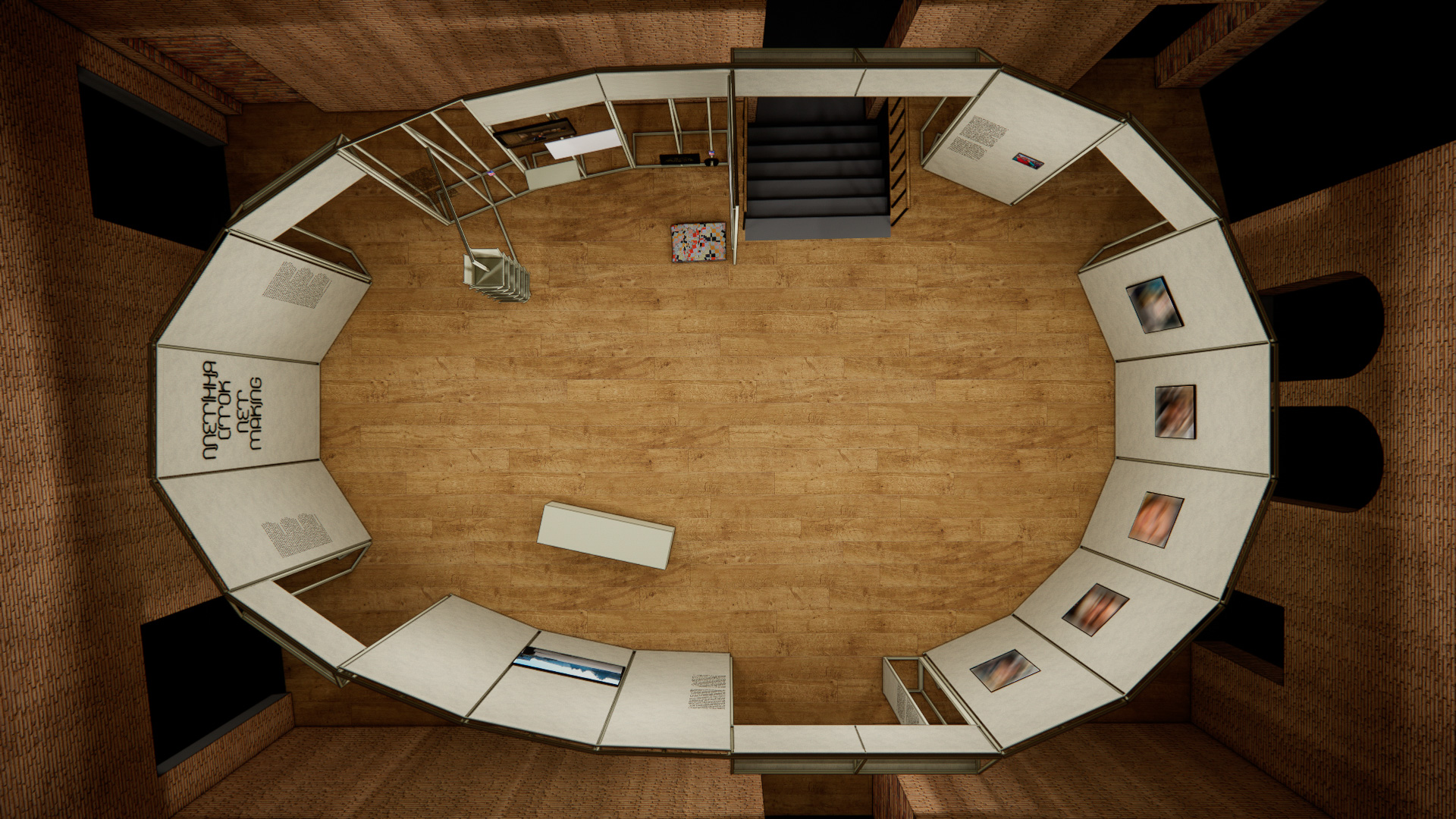
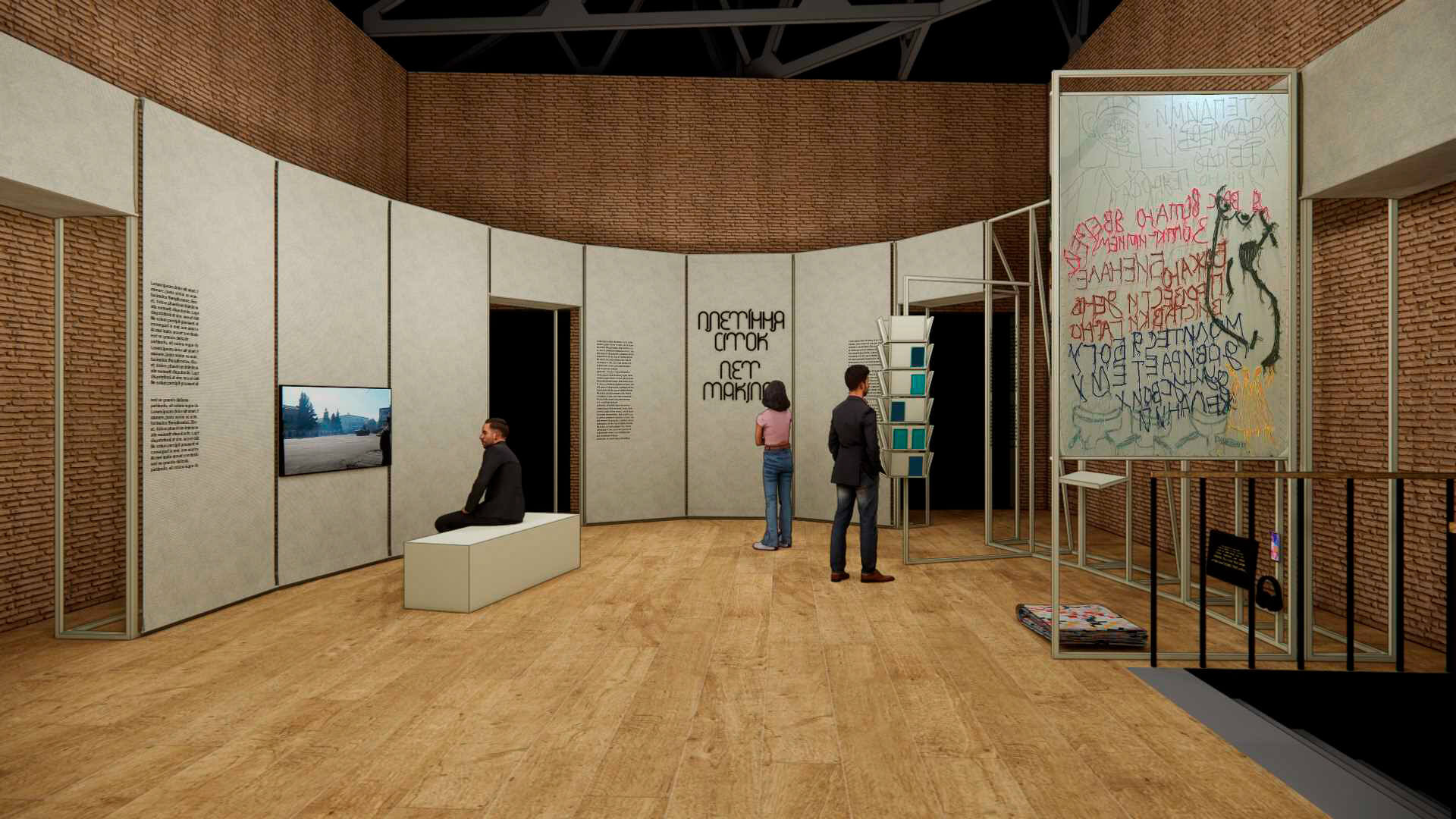
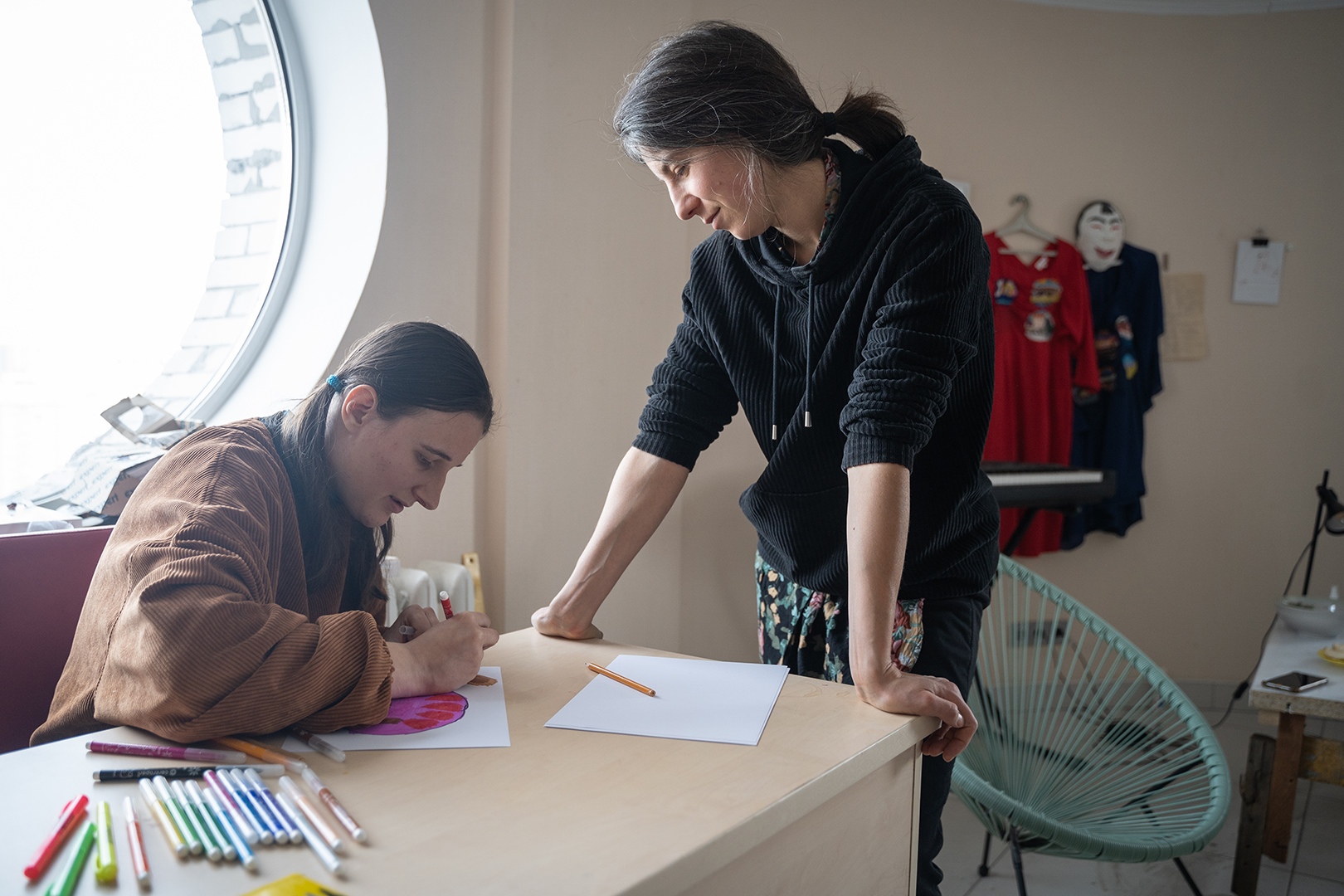
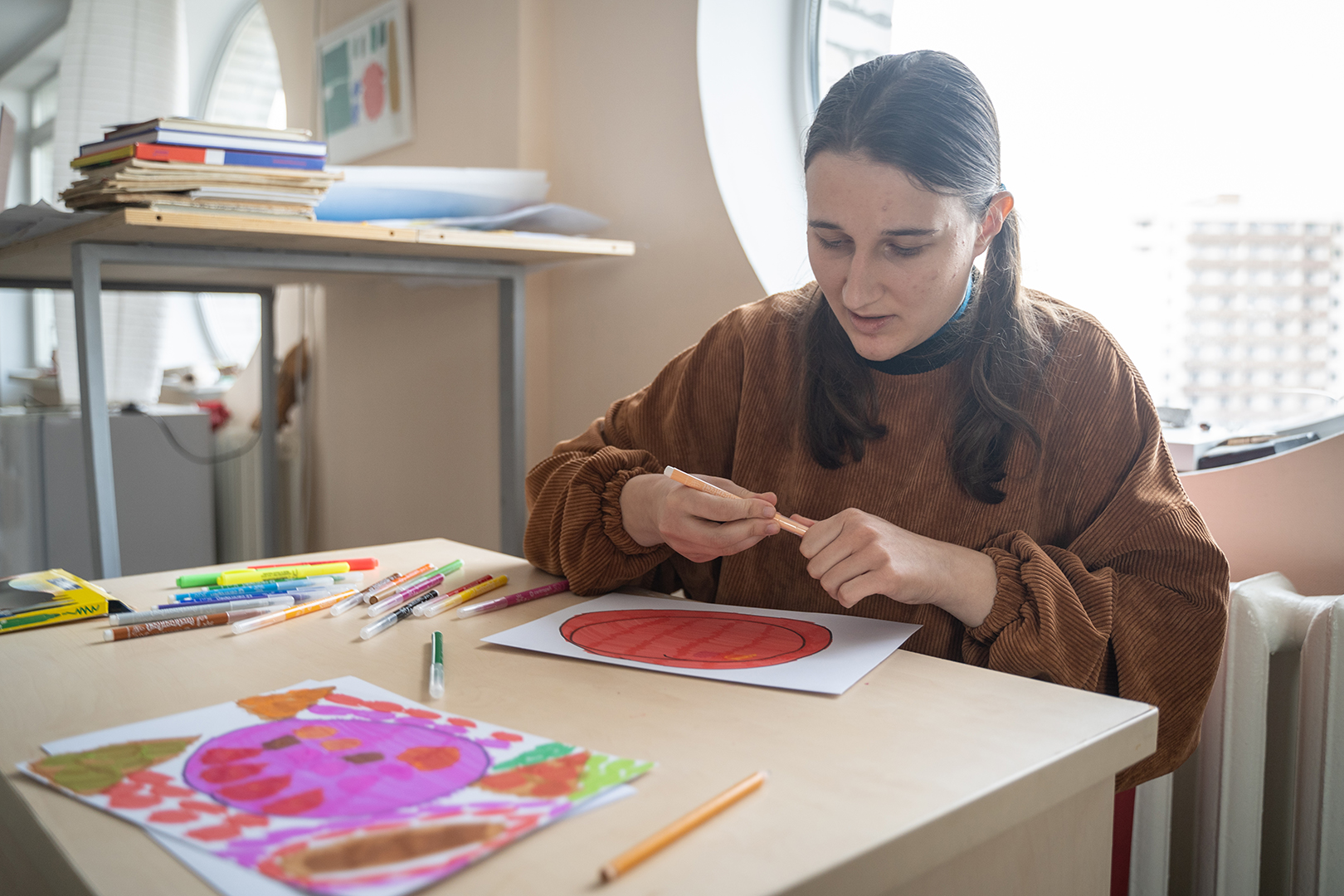
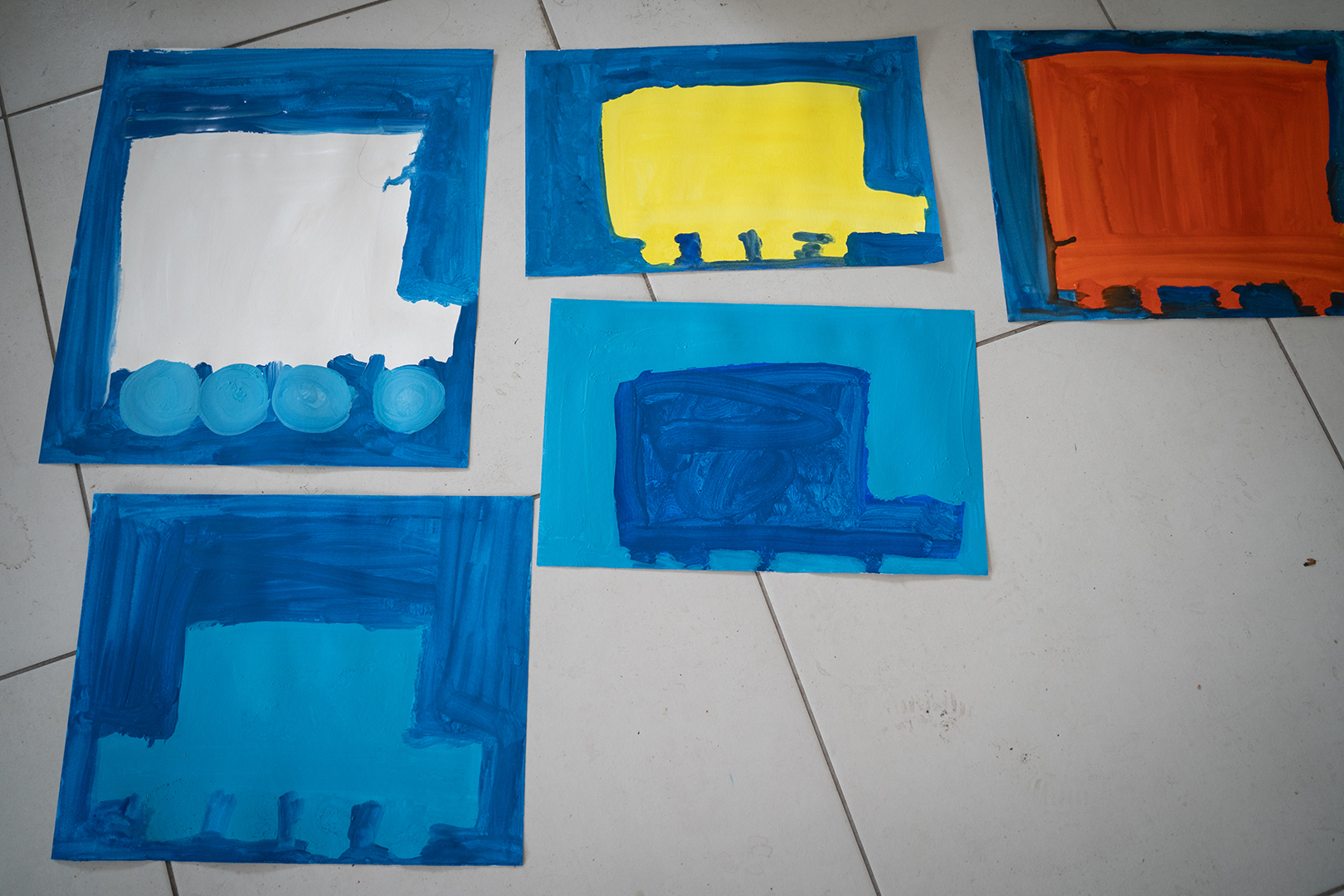
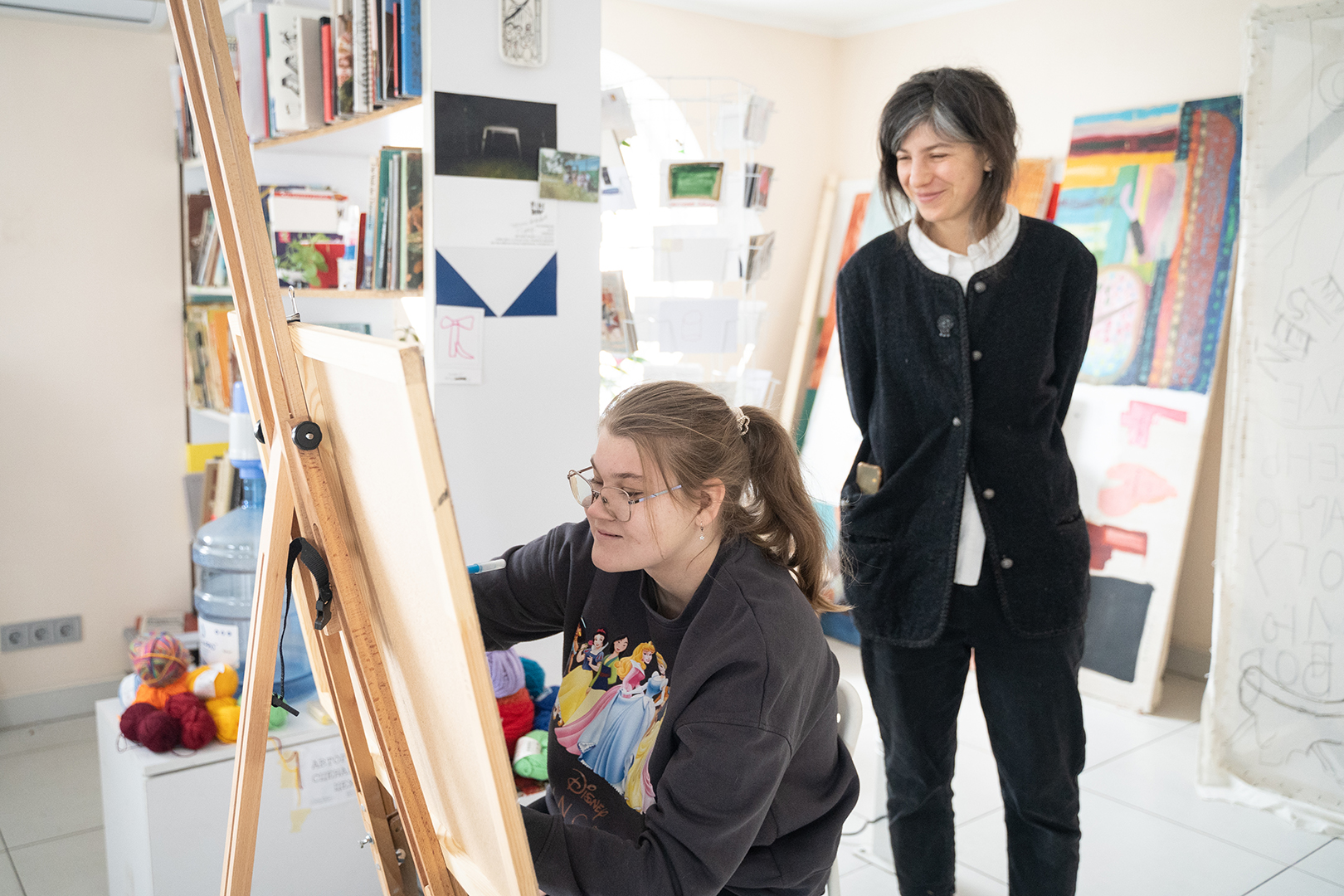
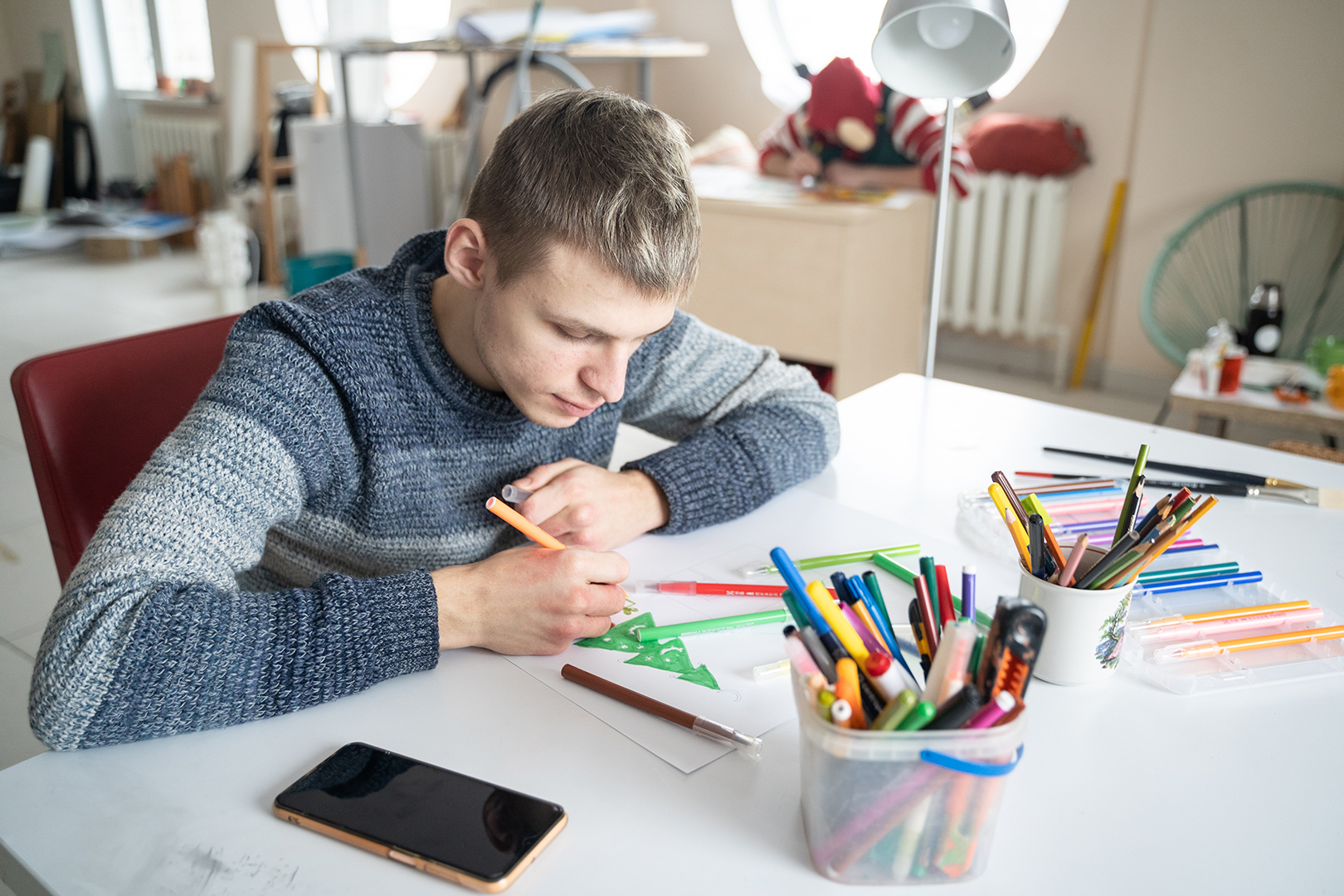
During the first week of Russia’s full-scale invasion, my colleague Olga Shyshlova and I resumed and made daily our online sessions in the inclusive art workshop where I’d worked for eight years. Each day, we had a new topic; we discussed and drew familiar things that anchored us to a certain routine. That’s how we held on. Of course, we were all traumatised by reality. But we relied on these attempts to act normally, preserving our previous knowledge of the world. Life continued, days stretched on, birthdays came.
We greeted each other with yet another holiday, and linguistic clichés became increasingly hollow and inappropriate, detached from us. The sense of redefining linguistic reality was reinforced by the characteristic of neurodivergent people to change these clichés, use them freely and/or hyperbolically, and alter conventional forms of communication.
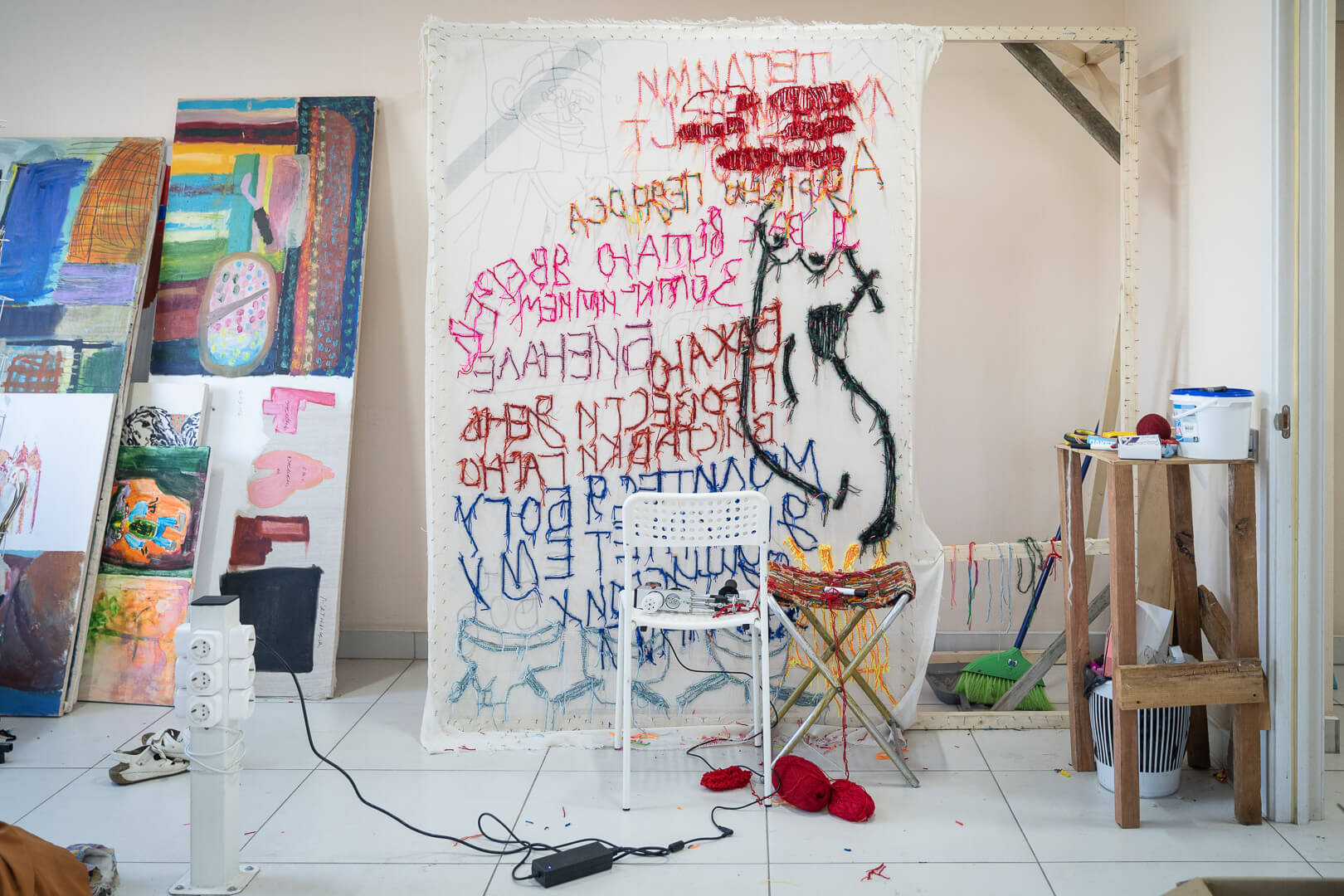
I dared to try capturing a certain language, which sometimes shines through texts, greetings, and reflections around celebrations. In them, one can notice that language is not detached from historical events: it can either be inconsistent with today’s changing state or, on the contrary, be appropriate, direct, and sincere.
Best Wishes artists
Anastasia Averina does beadwork and embroidery. She is fond of collecting puzzles and diamond mosaics. Since 2018, she has actively participated in the ‘Workshop of Possibilities’.
Heorhii Alaverdov (Chef Georgy) mainly works on painting and drawing. Running a culinary blog, practising judo, and indulging in comic culture. Has been attending the ‘Workshop of Possibilities’ since 2016.
Iryna Holoborodko is interested in literature, fashion, culinary arts, and space. Working with various media such as text, graphics, comics, illustrated text, and embroidery. She has been a regular participant at ‘atelienormalno’ since 2020.
Yevhen Holubentsev is a member and co-founder of ‘atelienormalno’. Since 2022, residing and working in Bonn and Cologne, Germany, where he participated in the KunsthausKAT18 workshop, being an author of the Ohrenkuss magazine and a resident of the FREI_BAD atelier.
Oleksii Denysenko is interested in music, guitar playing, and judo. Oleksii approaches collecting from the point of view of objects and colours placed next to each other in various combinations. Lately, he has been interested in still-life photography. Joined the ‘Workshop of Possibilities’ in 2020
Vlada Dyka primarily works with painting, drawing from photographs and copying artworks. Vlada runs her own video blog on cooking and is active on TikTok and Instagram. Joined the ‘Workshop of Possibilities’ in 2021.
Olia Zholobetska’s interests in animals, planets, and the marine world. The main Olia’s medium is drawing. She has been attending the ‘Workshop of Possibilities’ since 2016, alongside enjoying cooking and camping.
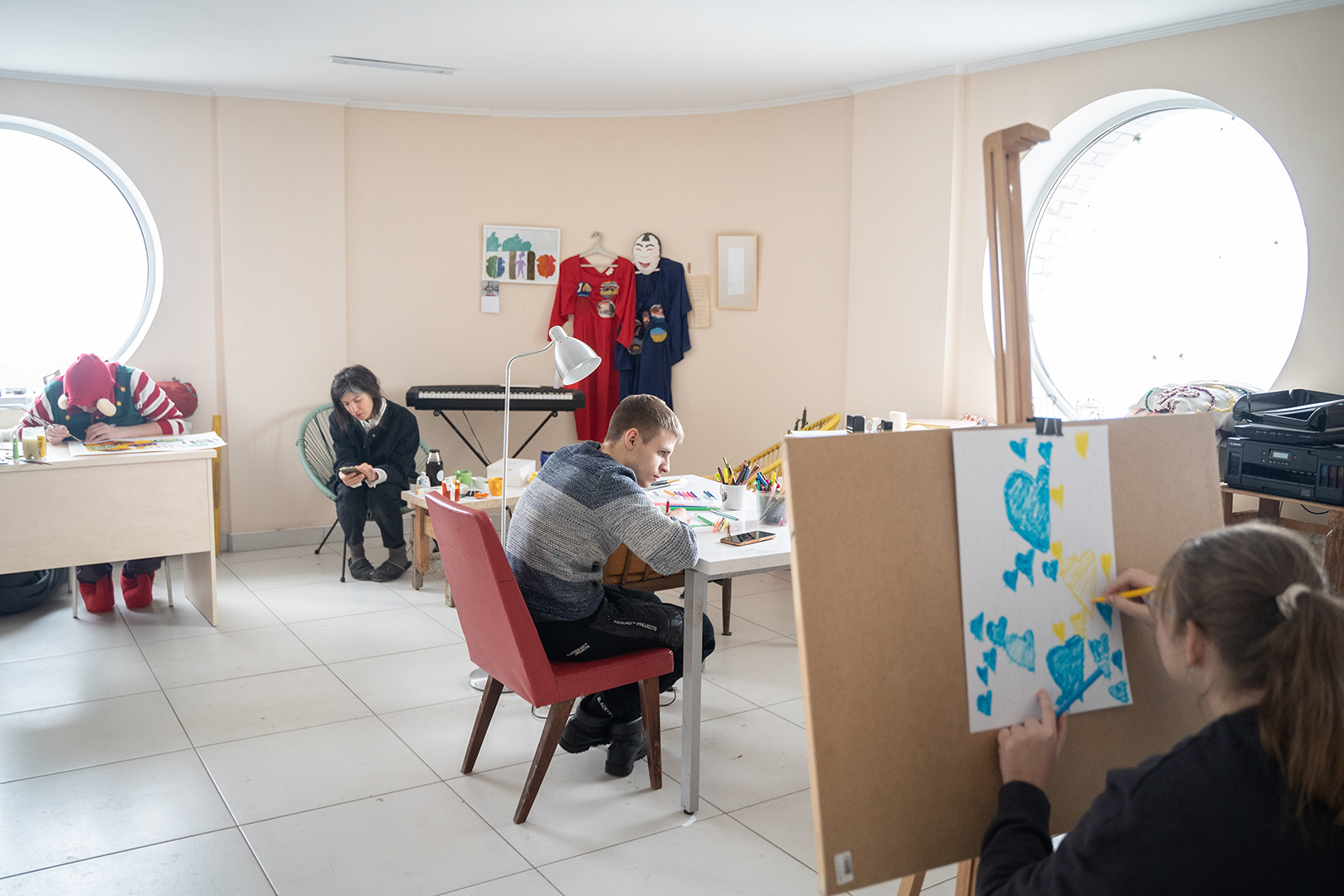
Nastia Kravchuk is passionate about cooking, dancing, and singing patriotic songs. Nastia often incorporates symbols like hearts and the Ukrainian flag into her drawings. Since 2018, she has been attending the ‘Workshop of Possibilities’.
Daryna Malyuk likes drawing, photography and cooking. The topics that interest Darina are portraits, animals, body parts, clothes, and ballet poses. Published in the NOHA magazine of art documentary.
Oleksii Ovdiienko is exploring themes of sound, rhythm, and death. Oleksii searches for the particular radio frequencies in each new city and uses these connections in the texts he incorporates in his artworks. Since 2016, he has participated in the ‘Workshop of Possibilities’.
Artem Oliinyk primarily works in painting, focusing on monochromes and plot-based works. He avidly supports the scouting movement and has conquered Ukraine’s highest peak, Hoverla, multiple times. He has participated in the ‘Workshop of Possibilities’ since 2016.
Valentyn Radchenko does graphics, painting and performance. He is the author of poetry, texts, and original books. Engaged in collecting and working on personal and group projects in ‘atelienormalno’.
Anna Sapon works with bead embroidery, wire weaving, carpet making and macrame. She is also interested in text, poetry, graphics, and painting. Since 2020, she’s been part of ‘atelienormalno’.
Oleksandr Steshenko is a versatile artist involved in theatre, film acting, screenwriting, and props management. Starred in the films ‘Tribe’, ‘Captum’ and others. Oleksandr is a co-founder and regular participant of ‘atelienormalno’.
Varia Shyshlova loves cooking, painting, and cars. Varia aims to learn Dutch and obtain a driver’s license. She has actively participated in the ‘Workshop of Possibilities’ since 2016.
*atelienormalno — is both a studio community and an artist organization founded in Kyiv in 2018, in which professional artists with and without Down syndrome work together.
*Workshop of possibilities — an educational project of PinchukArtCentre designed for adults with mental disabilities. Within the project, participants solve specific creative tasks together with contemporary artists.